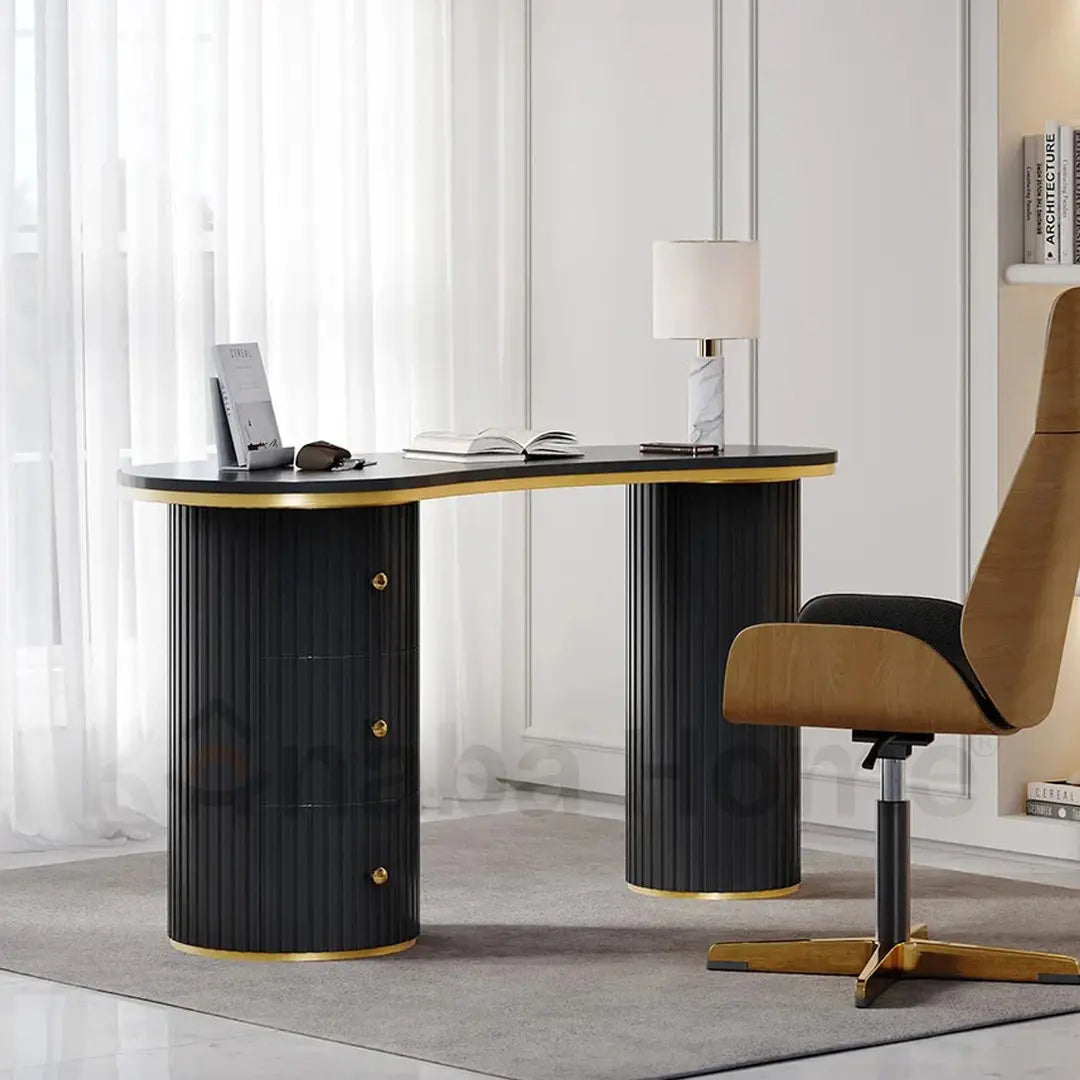
How to Choose an Office Desk for a Small Room
It’s great to work from home—until your laptop starts taking over the dining room table. Your charger hangs across the floor, notebooks congregate around your coffee mug and there's little room to get anything done. Living in a small condo in Dubai? Finding space for a real office desk can be a challenge.
However, you don’t need a separate office to make a comfortable work space. A small bedroom corner, an empty wall, or even an unused space near the living room can accommodate a desk.
The trick is knowing what size to buy, where to place it, and which features you'll actually use.
How to Choose an Office Desk for a Small Room Without Wasting Floor Space
Before ordering a desk online, take a measuring tape and check your available space. A desk might look compact in photographs but feel much larger once you add a chair.
Here are some practical things worth checking before buying.
1. Measure the Space Before Choosing a Desk
Start by measuring the width and depth of the area where you want to work.
A desk with a width of 80-100 cm could be enough for occasional laptop work. If you use a monitor, keyboard, and notebooks, consider a width of 120 cm or more.
Remember these measurements:
- Allow enough room for your laptop and writing materials.
- Keep approximately 75–90 cm behind the chair where possible.
- Check nearby doors, wardrobes, and drawers.
- Measure the desk's depth, not just its width.
Use masking tape to tape the size of the desk on the floor. This simple trick helps you understand how much room the furniture will occupy.
2. Choose the Right Type of Office Desk
Different desk designs solve different space problems. Think about how you work before choosing one.
- Wall-mounted desks: These work well when floor space is limited. Some fold against the wall after use.
- Corner desks: A corner office desk can make use of an empty bedroom corner. However, check whether the shape provides enough legroom.
- Slim writing desks: These have narrow tabletops and usually fit along a wall. They're suitable for laptop work and occasional paperwork.
- Desks with drawers: Choose one if you regularly use notebooks, files, chargers, and stationery.
Don't buy a large executive desk simply because it offers more storage. You may end up sacrificing valuable walking space.
3. Check the Desk Height and Chair Comfort
An attractive desk becomes frustrating when you cannot sit comfortably.
Many standard office desks measure around 72–76 cm high, but that doesn't mean every desk suits every person.
Sit in your office chair and place your hands where the keyboard would be. Your shoulders should remain relaxed, and your elbows should bend comfortably.
If your feet don't reach the floor, consider an adjustable chair with a footrest.
Also, check the space underneath the desk. Drawers and support bars shouldn't restrict your knees.
4. Choose Storage You Will Actually Use
A small desk doesn't need six drawers. Sometimes, one drawer and a nearby shelf provide enough storage.
Before buying, make a list of everything you keep on your current work surface.
If all you need is a laptop, charger and notebook, a simple desk will do.
If you handle documents regularly, look for drawers or a filing compartment.
You can also install wall shelves above the desk, provided you mount them securely.
5. Pick a Material That Suits Daily Work
Wooden office desks remain popular because they come in different colours and finishes.
However, don't choose furniture based on appearance alone.
Determine if the desk is made of solid wood, engineered wood, metal or glass. Ask about cleaning instructions and how the surface handles spills.
If you use a monitor arm, confirm that the tabletop supports clamp mounting.
Where Should You Place an Office Desk in a Small Room?
A bedroom corner can work well, especially when you already have matching bedroom sets.
Instead of putting the desk right in the path of strong sunlight, try placing it next to a window. This can help reduce screen glare.
If your bedroom has limited space, consider placing a narrow desk against an empty wall.
In a studio apartment, your workspace may sit close to living room sets or dining room sets. Choose a desk finish that looks comfortable alongside your existing furniture.
Avoid blocking walkways or placing cables where someone might trip.
Can You Use a Dining Table Instead of an Office Desk?
Some people work from dining tables because they have no separate study area.
This can work for occasional tasks, but check whether your dining chairs provide suitable support.
Dining tables may also sit at an uncomfortable height for keyboard work, depending on your chair.
If you regularly work from home, a dedicated desk usually makes it easier to organise equipment and maintain a fixed working area.
For open-plan apartments, matching your desk finish with dining chairs or nearby bar stools can help the furniture look connected.
At Kanaba Homes, you can explore different furniture designs and compare office desk styles that suit compact bedrooms, apartments, and home workspaces.
Frequently Asked Questions
1. What office desk size is best for a small room?
An 80–100 cm wide desk may suit basic laptop work.
2. Are corner desks good for small bedrooms?
Yes, if the corner provides enough space for your chair and legs.
3. Can I place an office desk in my bedroom?
Yes. Choose an empty wall or corner without blocking movement.
4. Is a wooden office desk good for daily use?
Yes, provided it has sturdy construction and a suitable surface finish.
5. Should I buy an office desk with drawers?
Choose drawers if you need regular access to documents, stationery, or accessories.

