Wooden vs Marble Dining Tables: Which Is Better
You have found two dining tables you really like. One has a wooden top with a lovely brown finish. The other has a white marble top with grey lines running through it. Both would look great in your dining room, but which one should you take home?
This is where many furniture buyers get confused. A dining table is something you use for years. You eat breakfast there, serve dinner to guests, and sometimes leave your laptop on it for hours. That's why the material matters. Wood and marble look different, feel different, and need different care. Knowing these differences will help you spend your money on a table that actually suits your home.
Wooden vs Marble Dining Tables: Which Is Better for Your Family, Budget and Dining Room?
The answer changes from one home to another. A family with young children might prefer wood because many scratches can be repaired. Someone furnishing a formal dining room might love marble for its natural patterns.
Before buying, ask yourself three questions. Will you use the table every day? Do you have children at home? How much time can you spend looking after the tabletop?
Your answers will make the choice much easier.
Wooden Dining Tables: Why Are They Still So Popular?
Think about the dining table at your parents' or grandparents' house. There's a good chance it was wooden. Some of those tables have lasted for decades.
Wood remains a favourite because it fits into almost any room. A dark walnut table looks lovely against cream walls, while lighter oak works well in smaller apartments.
Wood also gives you plenty of freedom when choosing dining chairs. Fabric seating, leather upholstery, or simple wooden chairs can all work with the same table.
What Makes Wooden Tables Worth Buying?
They come in many colours: Choose light oak, honey brown, walnut, or darker finishes.
- They can last for years: A well-made hardwood table can serve several generations.
- You can repair some damage: Scratches on solid wood can often be sanded and refinished.
- They suit different homes: Wood looks equally good in modern apartments and traditional villas.
- They offer more budget choices: Wooden dining sets come in different materials, sizes, and price ranges.
Wood does need care. Never leave hot cookware or wet glasses directly on the surface. Water can damage the finish, and strong sunlight may change its colour.
Marble Dining Tables: Beautiful, but Are They Practical?
A marble dining table can change the look of an entire room. You don't need much decoration when the tabletop already has beautiful natural patterns.
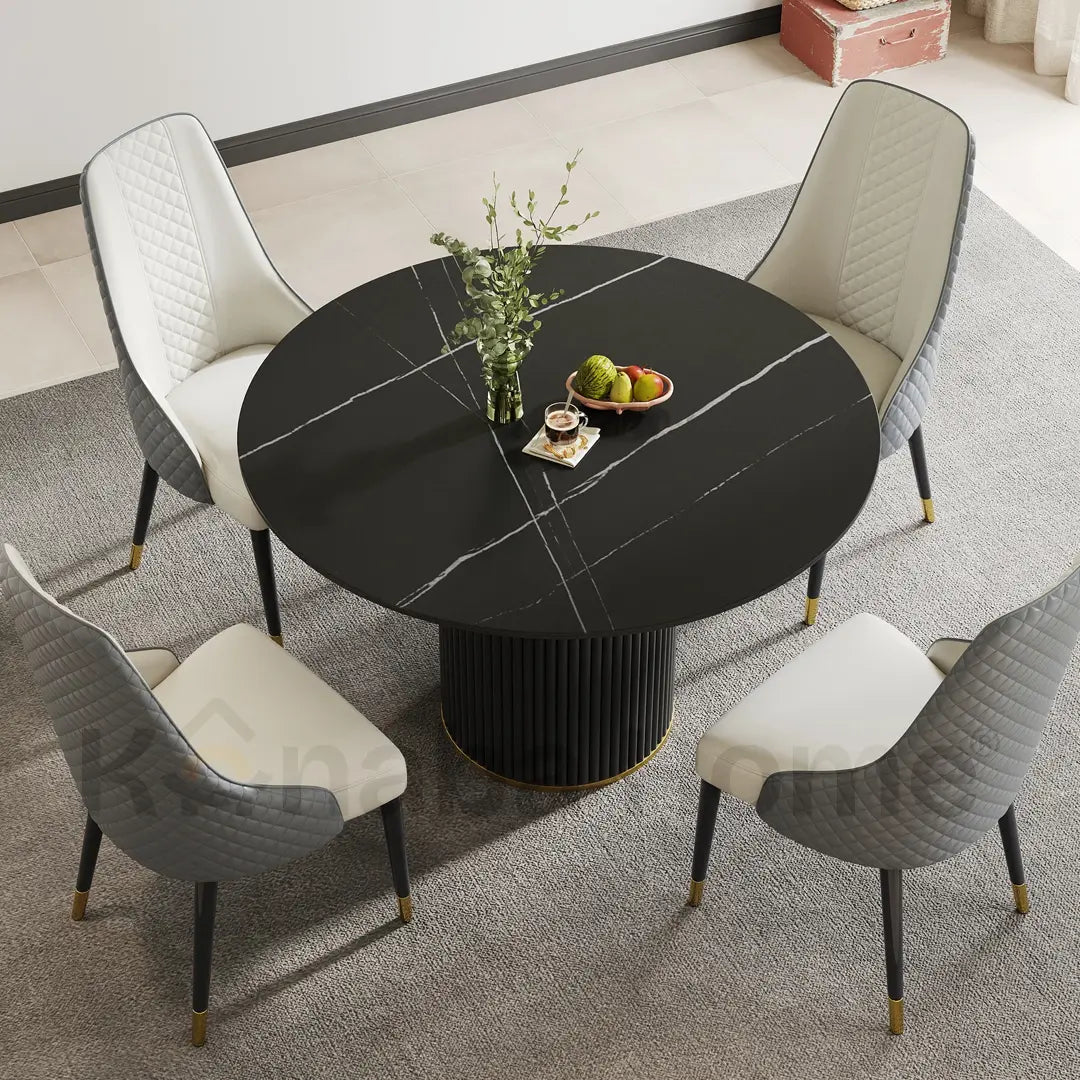
White marble with grey veins looks good in bright dining rooms. Black marble can look striking against beige walls and gold-coloured furniture.
Marble also pairs nicely with upholstered dining chairs, especially when you want a more formal dining area.
What Should You Know About Marble Tables?
- Natural marble has patterns that vary from one slab to another.
- White and beige marble look good with light-coloured interiors.
- Marble is heavy, so moving the table can take more effort.
- Acidic foods such as lemon and vinegar can leave dull marks.
- Some marble surfaces need periodic sealing to help prevent stains.
One important thing many buyers miss is that marble can scratch. It may look extremely hard, but dragging ceramic plates or rough objects across the surface can leave marks.
Wooden vs Marble Dining Tables: What Is the Difference?
| What Matters | Wooden Table | Marble Table |
|---|---|---|
| Daily cleaning | Usually easy | Needs more care |
| Surface marks | Many can be repaired | Repairs can be difficult |
| Appearance | Warm and natural | Smooth with natural veins |
| Weight | Usually lighter | Usually heavier |
| Water spills | Can damage the finish | Can stain unprotected stone |
| Price | Many affordable choices | Natural marble often costs more |
Which Table Should You Buy for a Small Dining Room?
A beautiful table means little if nobody can walk around it comfortably.
For smaller apartments, consider a round wooden table with four chairs. Round tables remove sharp corners and can make movement easier.
If you love marble, look for a compact table with a slim base. Avoid buying a large six-seater simply because it looks attractive in the showroom.
When shopping for dining sets, measure the room and leave enough space to pull out the chairs.
You can also place a small side table near the dining area to hold serving bowls, napkins, or decorative items.
How to Keep Your Dining Table Looking Good
Neither wood nor marble stays beautiful without proper care.
For wooden tables:
- Wipe spills immediately with a soft cloth.
- Use placemats under hot plates.
- Keep the table away from prolonged direct sunlight.
- Avoid harsh cleaning chemicals.
- Follow the manufacturer's instructions for maintaining the finish.
For marble tables:
- Clean food spills as soon as possible.
- Use a gentle, stone-safe cleaner.
- Never clean marble with vinegar or lemon.
- Place protective mats beneath hot dishes.
- Ask whether your marble needs sealing.
If you're buying matching furniture, check whether your side table uses the same finish or colour as the dining table.
So, Which Dining Table Makes More Sense?
For a busy household, wood is often the easier choice. It feels comfortable, comes in many styles, and offers more repair options when everyday wear starts showing.
Marble makes sense when you enjoy its natural patterns and don't mind being careful with food spills.
At Kanaba Homes, you can shop for furniture for dining rooms, living rooms and other spaces throughout your home. Consider dining sets, tables and seating options before picking out what will work for your room. Make sure to read actual material, tabletop finish, measurements and care instructions before purchasing.
Frequently Asked Questions
1. Are marble dining tables more expensive to maintain than wooden ones?
They can be. Marble may need sealing or professional stain removal. Wooden tables also require maintenance, but many surface scratches are easier to repair.
2. What are the best finishes to protect a wooden dining table?
Polyurethane, lacquer, and hardwax oil are common choices. Polyurethane offers good protection against everyday spills, while hardwax oil allows local repairs.
3. Is marble a good choice for a family with young kids?
Yes, but expect spills and fingerprints. Marble also has hard edges, so a table with rounded corners may be safer for younger children.
4. How do scratches and heat damage compare between wood and marble?
Wood can develop scratches and heat marks, but refinishing may help. Marble can scratch too, and sudden heat changes may damage the stone.
5. Which is better for a dining table: wood or marble?
Choose wood for everyday family meals and easier repairs. Choose marble if you prefer its appearance and can give it the care it needs.

